Portable Handwashing Stations for Events and Work Areas
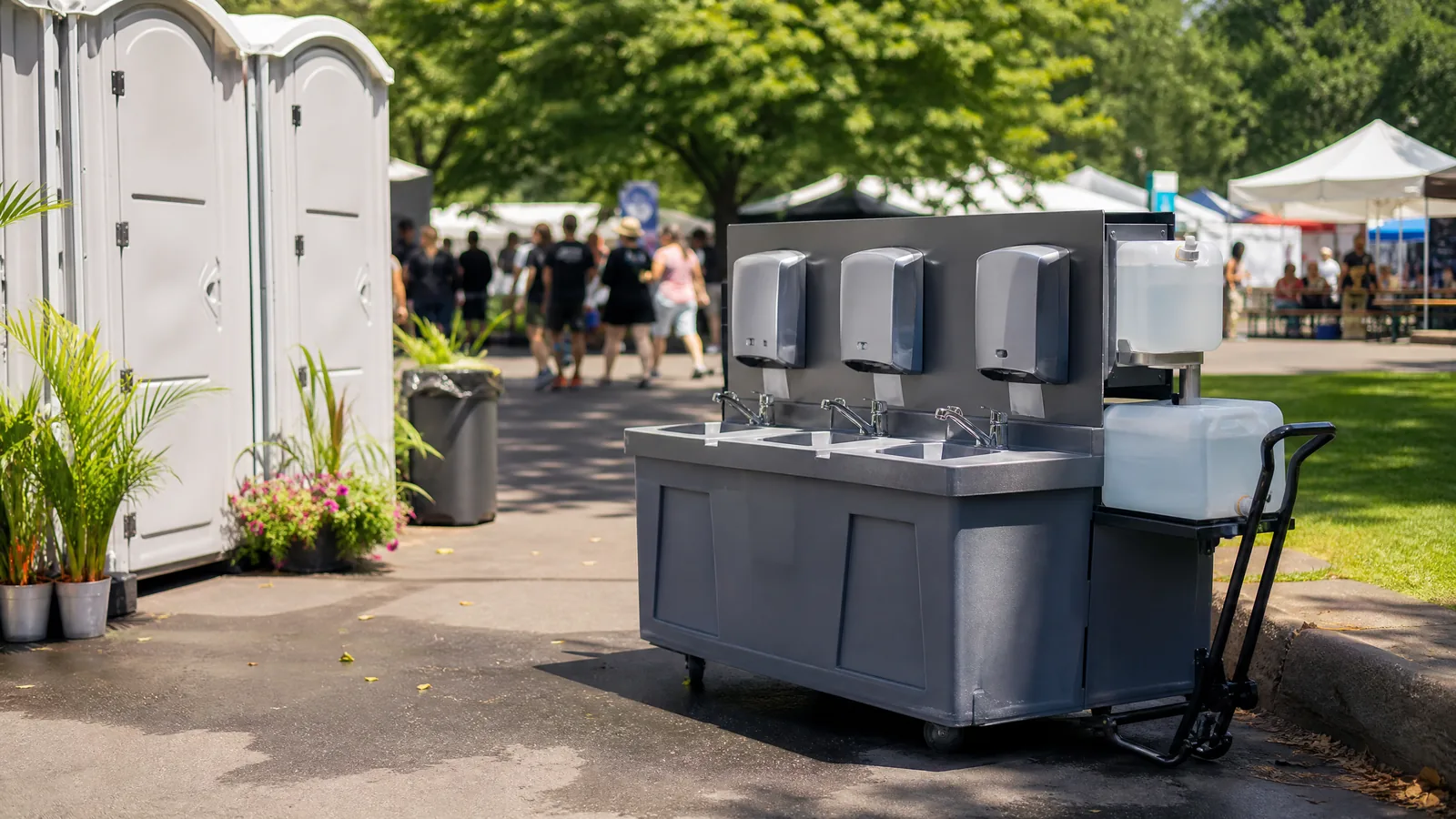
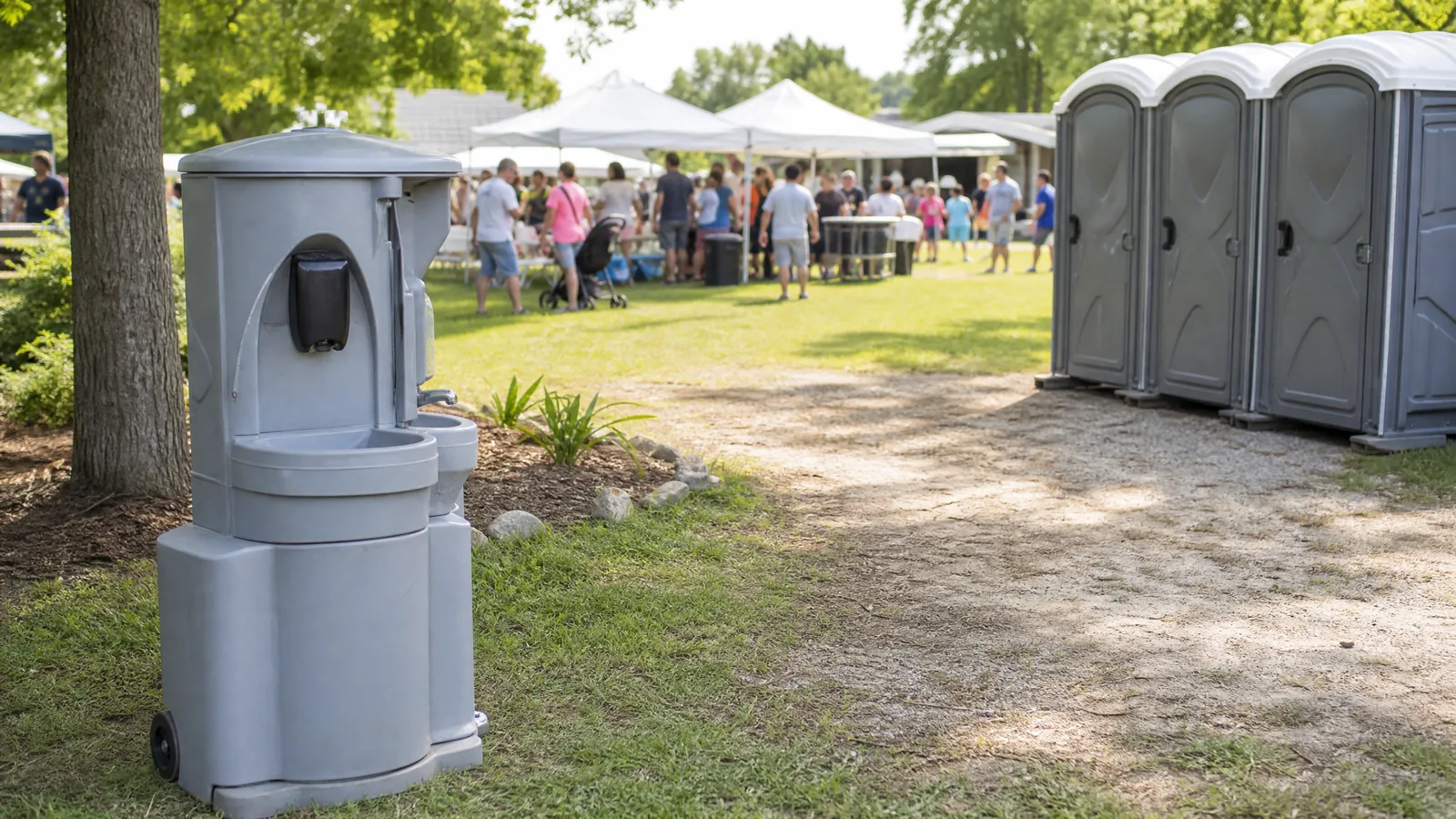
A restroom plan answers one need; handwashing helps support the whole site. Stations can be useful near food service, event entrances, activity zones, break areas, and work locations where users need a convenient hygiene point without walking back to a restroom. The best placement depends on circulation, visibility, surface, access, and the site’s operating plan.
Put hygiene where decisions happen
Guests are more likely to use a station when it is visible at the point where they eat, enter, leave, or handle shared materials. Avoid creating a queue across a doorway or narrowing a route. At a construction site, coordinate placement with the break area and work progression while keeping the station away from hazards, vehicle paths, and material storage.
Review the surface and surroundings
A level, stable area makes the station easier to approach and helps keep water and foot traffic manageable. Consider weather exposure, shade, drainage, lighting, nearby trash collection, and whether the station could be knocked or blocked during setup. Outdoor locations should be reassessed if rain, wind, or a changing site plan affects the surface.
Coordinate with food and events
For weddings, festivals, school events, and community gatherings, include handwashing in the vendor and guest-flow plan. NYC Parks notes that larger park events may require a special-event permit, so hygiene placement should be discussed alongside the venue’s other requirements. [3]
Make it part of a complete plan
Handwashing does not replace the need to choose appropriate restroom types, quantity, accessible access, or a sensible location. Use the event page for guest planning and the construction page for worksite logistics.
Internal links: Link to ADA-accessible portable restrooms when the station must support an inclusive route and to long-term rentals for recurring projects.
FAQs
Where is a handwashing station most useful? Common locations include near food service, entrances, activity areas, and worker break zones, provided the placement does not obstruct circulation or create a safety issue.
Can a station go on grass? It may be possible, but the surface, slope, drainage, weather, and venue rules should be reviewed before selecting that location.